


Regular vs Large DM Screen: Which Size Should You Choose?
When choosing a Game Master screen, the first difference that usually stands out is its height.
Our Regular screen is approximately 25 cm tall, while the Large reaches around 31 cm, close to the height of an A4 sheet placed vertically. Six centimetres may not sound like much, but at the gaming table they can significantly change how the Game Master sees the players, checks their notes and interacts with maps and miniatures.
However, there is no single size that is better in every situation. The right choice mainly depends on how you run your sessions, whether you usually play sitting or standing, and the kind of space you want to create behind the screen.
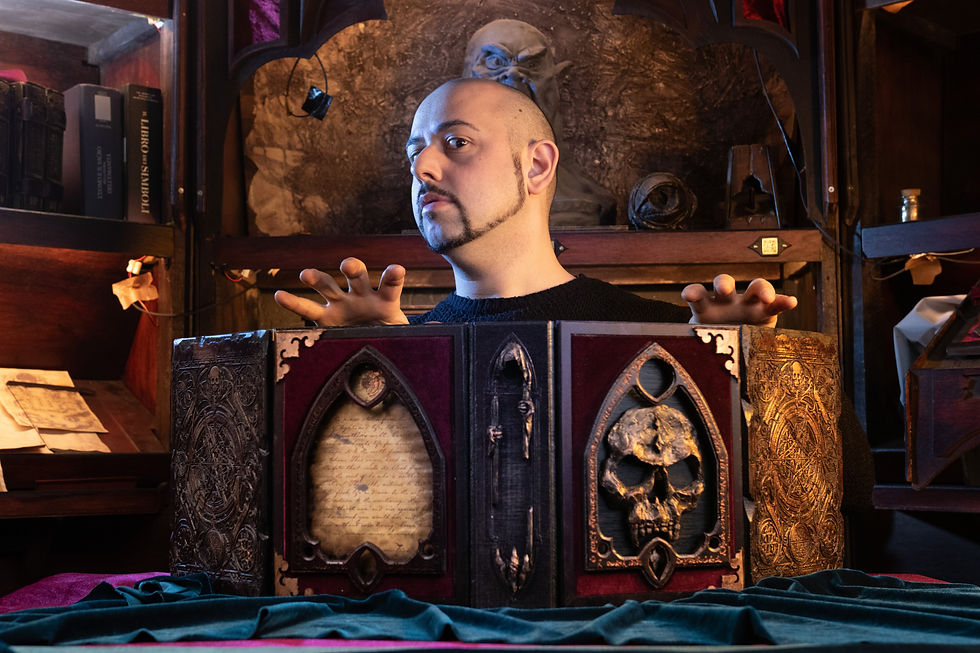
The Regular screen: keeping the table within reach
The Regular is the more compact option and provides a more open view of the gaming table.
Its height of approximately 25 cm makes it easier to maintain eye contact with the players and keep an eye on maps, miniatures and game components without having to constantly lift yourself out of your chair.
This is particularly useful for Game Masters who run dynamic sessions and frequently move miniatures, draw on maps, measure distances or interact directly with the gaming area.
The Regular still creates a clear separation between the public and private sides of the table, but without becoming an overly imposing barrier. It keeps dice, notes and prepared materials hidden while allowing the Game Master to remain close to the centre of the action.
When the Regular may be the right choice
The Regular is particularly suitable for Game Masters who:
frequently use tactical maps and miniatures;
prefer to play mainly while seated;
want to reach the centre of the table easily;
use a small table or one already occupied by many game components;
prefer a screen with a more discreet visual presence.
This does not necessarily mean having less room to organise your materials. It simply means having a lower and more accessible workspace, with the entire gaming table kept easily under control.
The Large screen: a more defined workspace
At approximately 31 cm tall, the Large creates a more clearly defined space around the Game Master.
Notes, tables and information attached to the inside of the screen sit higher and therefore closer to eye level. This can be particularly comfortable during longer sessions, as it allows the Game Master to check information without constantly lowering their gaze towards the tabletop.
The additional height also provides greater protection for anything that needs to remain hidden, including dice, unrevealed miniatures, maps, enemy statistics and story notes.
From a visual point of view, the Large inevitably has a stronger presence. It does more than simply divide the table: it helps create a true Game Master’s workstation.
When the Large may be the right choice
The Large is particularly suitable for Game Masters who:
keep a large amount of information and reference tables inside the screen;
want their notes positioned closer to eye level;
prefer greater privacy behind their workstation;
run part of the session while standing;
use the table mainly for narrative-focused play;
are looking for a screen with a stronger visual and scenic presence;
have enough room for a more structured setup.
For a Game Master who often stands up, performs characters while standing or moves around the table, the additional height can be a real advantage. Information remains easier to read without having to bend down towards the table.
Miniatures or narrative-focused play?
The style of the session is probably one of the most important factors to consider.
When playing mainly with miniatures, maps and three-dimensional scenery, the Game Master needs to see the table clearly and reach every area without difficulty. In this situation, the lower height of the Regular can make the game feel smoother and more immediate.
However, this should not be considered an absolute rule. A Game Master who manages miniatures mainly while standing may also find the Large extremely comfortable. From that position, the additional height becomes less intrusive, while notes remain closer to the natural line of sight.
During a more narrative-focused session, based mainly on description and imagination, the table is used less as a physical battlefield. The Large can therefore create a more enclosed and atmospheric workspace without significantly interfering with the flow of the game.
In practical terms:
Many miniatures and a seated Game Master: the Regular will generally be more practical.
Many miniatures and a Game Master who often stands: either size can work well.
A mainly narrative session with many notes: the Large will generally provide a more comfortable and protected workspace.
Playing while seated or standing
A screen is not experienced only from the front. The relationship between the Game Master and its height changes considerably depending on whether they are sitting or standing.
When seated, an additional six centimetres can make the screen feel noticeably more present. The Large provides better concealment for everything behind it, but it may also require the Game Master to stand up or lean forward more often to see certain areas of the table.
The Regular makes it easier to look over the top edge and interact directly with the map.
When the Game Master plays while standing, the situation changes. A screen that is too low may require them to lower their head whenever they need to check notes or tables. The Large places information higher up, reducing the need to bend towards the table.
Game Masters who frequently alternate between sitting and standing should therefore consider which position matters most during the moments when they consult the screen.
The height of the Game Master and the table also matter
Two people can use the same screen and have completely different experiences.
A tall Game Master sitting on a relatively high chair may have a perfectly clear view even with the Large. A shorter person, or someone sitting on a low chair compared to the tabletop, may experience it as much more enclosing.
The height of the screen is therefore only one part of the equation. What really matters is the relationship between:
the height of the Game Master;
the height of the chair;
the height of the tabletop;
the distance between the Game Master and the screen.
For this reason, it is difficult to establish one universally correct size. The same Large screen may appear imposing on a low table and perfectly proportioned on a taller one.
Movement and adaptability at the gaming table
Both the Regular and the Large are designed to be opened and positioned according to the available space.
They do not necessarily need to form a perfectly straight wall. The panels can be angled to follow the shape of the table, bring one section of the screen closer to the Game Master or leave more open space towards the area used for miniatures.
This means that even a larger screen can be adapted to a more compact workstation, while the Regular can be opened wider to create a broader working area.
The main difference therefore remains vertical: how much information do we want directly in front of us, and how open do we want our view of the table to remain?
Regular does not mean “limited”, and Large does not mean “better”
It is easy to think of the Regular as the simpler version and the Large as an upgrade. In reality, they are two tools designed for different needs.
The Regular prioritises direct interaction with the table. It is compact, dynamic and visually unobtrusive.
The Large prioritises privacy, vertical organisation and scenic presence. It creates a more enclosed workstation and brings notes closer to eye level.
The choice is therefore not about having “more” or “less” screen. It is about deciding where you want your attention to be focused during the session.
A simple way to choose
The Regular is probably the right choice when the table itself is a central part of the game and the Game Master wants to observe and reach it without difficulty.
The Large is probably more suitable when the screen is used as a true workstation, with numerous notes, tables and materials that need to remain easy to read and hidden from the players.
When in doubt, the simplest solution is to test both heights directly at your own gaming table.
Take two pieces of cardboard, one 25 cm tall and the other 31 cm tall, place them where the screen would normally sit and use your usual chair. Within a few minutes, it becomes much easier to understand which height allows you to see the players comfortably, reach the miniatures and read your notes.
Because a Game Master screen should not be chosen only for its appearance. It should become a natural part of the way you run your stories.

Comments